
Fishing Windblown Banks: Why Baitfish and Predators Stack Up
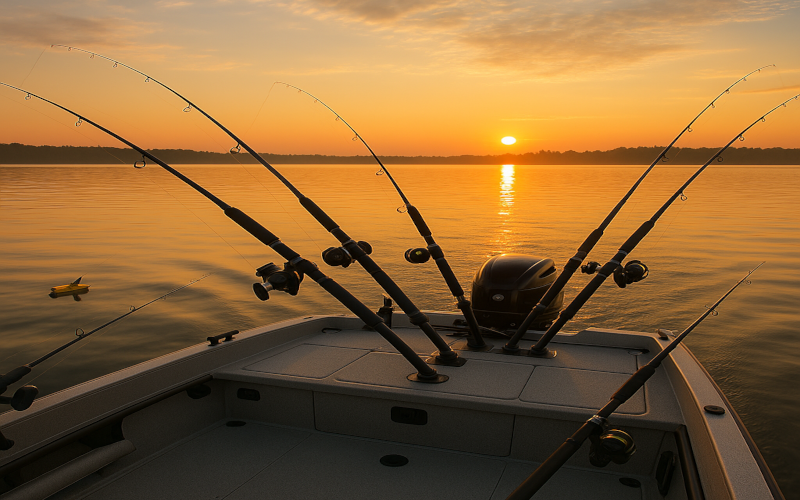
Use wind direction, wave action, baitfish movement, water clarity, and boat control to fish productive windblown banks.
Wind can make a bank uncomfortable to fish and productive at the same time. Waves stir the shoreline, move plankton, disorient baitfish, and reduce visibility. Predators often take advantage of those conditions, especially where wind pushes forage against rock, grass, or a point.
Understand What the Wind Is Doing
Wind does not literally push every fish to the bank, but it changes the food chain. Surface water moves, small organisms concentrate, and baitfish may gather where food becomes easier to find.
The effect is strongest when the wind has blown steadily long enough to influence the water. A five-minute gust is not the same as several hours of consistent pressure.
Start on Points and Irregularities
A long straight bank gives fish many places to spread. A point, pocket, rock transition, or grass edge concentrates the effect of wind.
Begin where the bank changes direction. Waves may wrap around the point and create a slightly calmer pocket on one side. That boundary can become a feeding line.
Use Lures You Can Control
Wind adds bow to the line and makes light presentations difficult to feel. Increase lure weight enough to maintain contact without sacrificing the presentation.
Moving baits such as crankbaits, spinnerbaits, swimbaits, and vibrating jigs often fit windy conditions because they cover water and remain easy to track. For reels and tackle suited to casting in wind, anglers can compare Piscifun gear or browse KastKing fishing equipment.
Do Not Ignore Dirty Water
Wave action can create a narrow band of stained water along an otherwise clear shoreline. That reduced visibility may make fish more willing to move shallow.
Fish the edge between stained and clear water just as you would a mud line after rain. A lure that crosses from one color into the other can enter a high-percentage ambush zone.
Boat Position Is Part of the Pattern
The fish may be on the windy bank, but that does not mean your boat should be thrown against it. Set up far enough away that you can cast efficiently and correct position without constant high-power trolling motor use.
Approach from an angle that lets the wind help rather than fight every cast. If conditions are too rough for safe control, choose a protected area. Productive water is not worth risking the boat.
Shore Anglers Can Use Wind Too
From shore, a wind blowing into your face shortens casting distance but may bring fish closer. Use a slightly heavier lure and cast at angles instead of directly into the strongest gusts.
Waterproof footwear and a secure bag make rough-bank fishing more comfortable. XtraTuf is an approved footwear merchant, and Duluth Pack is an approved outdoor gear resource for anglers comparing durable carry options.
Know When the Wind Is Too Much
Strong wind can make boat ramps, open crossings, jetties, and exposed banks dangerous. Watch local forecasts and water conditions. If the wind prevents you from maintaining safe control, move or leave.
The best windblown-bank fishing happens when the wind creates opportunity without removing control. Learn to recognize points, stained edges, and bait movement, and the bank that looks hardest to fish may become the most productive water of the day.
Related Fishing Guides
Fishing regulations, access rules, seasons, size limits, and safety requirements vary by location. Verify current local rules before fishing.