
Catfish 101: Day vs. Night, Baits, Depth, and Structure
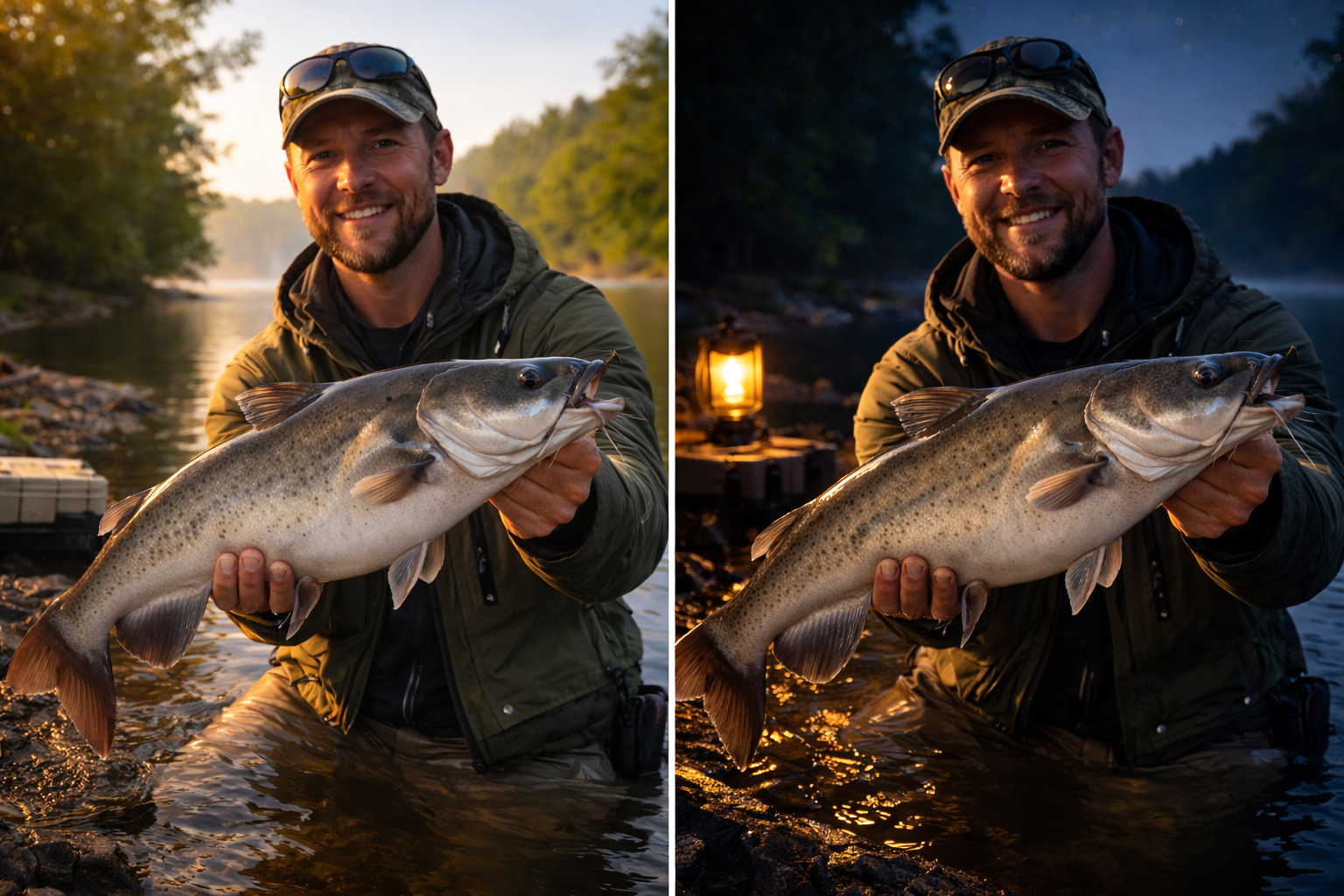
A practical beginner’s guide to choosing the right time, bait, rig, and location for channel cats, blue cats, and flatheads.
Catfish are the blue-collar heroes of freshwater fishing. They are abundant, they grow huge, they eat just about anything, and they pull like a freight train. Whether you are sitting on a riverbank with a lawn chair and a cold drink or anchored over a deep channel bend in a boat, catfishing offers some of the most reliable action in freshwater, if you understand the basics of timing, bait selection, and location.
The Three Species
Channel catfish are the most widespread and commonly caught. They average one to five pounds in most waters, with trophy fish exceeding 15 pounds. Channels eat everything, including cut bait, prepared stink baits, live bait, even hot dogs and soap. They are the most forgiving species for beginners.
Blue catfish are the giants. In rivers like the Mississippi, James, and Ohio, blue cats commonly reach 30 to 60 pounds, with fish over 100 pounds caught every year. Blues are primarily fish eaters. Fresh cut shad, skipjack herring, or live bait are the go-to presentations. They respond to current and move with the seasons more dramatically than channels.
Flathead catfish are solitary predators that prefer live bait above all else. A live bluegill, sunfish, or large shiner fished near heavy cover in a river is the classic flathead setup. Flatheads average larger than channels, with trophy fish exceeding 50 pounds, but they are harder to pattern because they do not school the way channels and blues do.
Day vs. Night
The oldest catfishing advice is to fish at night. That advice is not wrong. Catfish are more active after dark in most situations, but daytime catfishing can be equally productive when you adjust your approach.
Daytime catfishing. Fish deeper structure. In rivers, anchor over deep channel bends, holes below dams, and ledges where current pushes food along the bottom. In lakes, target creek channel edges, deep points, and humps in 15 to 35 feet of water. Catfish hold near the bottom in these areas during daylight, and fresh cut bait fished right on the bottom reaches them.
Nighttime catfishing. Catfish move shallower after dark, often feeding in water as shallow as two to five feet. Shallow flats, sandbars, rip-rap banks, and areas near boat ramps where people have been cleaning fish all day become productive. Night fishing also favors bank anglers, since the fish come to you rather than requiring a boat to reach deep structure.
The transition periods the hour before sunset through the first two hours of darkness, and the hour before dawn, are often the most productive windows regardless of species.
Bait Selection
Fresh cut bait is the most versatile catfish bait. Shad, skipjack herring, bluegill (where legal), and mullet cut into chunks produce well for all three species. The key word is fresh. Catfish can detect bait through smell and vibration, and fresh-cut bait releases more scent and oil than something that has been frozen and thawed twice.
Prepared baits and stink baits work well for channel catfish, especially in ponds and smaller lakes. Punch baits, dip baits, and dough baits all rely on strong scent to attract channels. They are messy, they stink, and they catch fish.
Live bait is essential for flatheads and excellent for big blues. A lively 4 to 6-inch bluegill or shiner hooked through the back and fished near bottom cover is the best flathead presentation that exists. Hook the baitfish behind the dorsal fin to keep it alive and swimming.
Chicken liver is a classic that works but has one significant drawback: it is difficult to keep on the hook. Wrap it in mesh or use a treble hook to improve bait retention. It produces best for channel catfish in warm water.
Rigging
Carolina rig (slip sinker rig). This is the standard catfish rig. Thread an egg sinker or no-roll sinker onto your main line, tie on a barrel swivel, add a 12 to 24-inch leader of slightly lighter line, and tie on a circle hook. The slip design lets a catfish pick up the bait and move without feeling the weight of the sinker.
Circle hooks are strongly recommended. They hook catfish in the corner of the mouth nearly every time, making unhooking easier and reducing gut-hooking dramatically. Sizes 5/0 to 8/0 cover most situations. Do not set the hook with a hard snap. Simply reel tight and the circle hook does the work.
Sinker weight. Match your sinker to the current. In still water, 1/2 to 1 ounce is sufficient. In moderate river current, 2 to 3 ounces keeps your bait on the bottom. In heavy current below dams, you may need 4 to 8 ounces or a bank sinker that grips the bottom.
Structure and Location
Catfish relate to bottom structure and current more than any other factor. In rivers, focus on outside bends where current has carved deep holes, below dams where current concentrates bait, the mouths of tributaries, and log jams that break current and trap food. In lakes, target creek channel ledges, points that extend into the main lake, submerged humps, and the mouths of major creeks.
A fish finder helps enormously, but even without one, you can locate productive water by studying maps and looking for areas where depth changes quickly or current is concentrated.
Gear
Catfish gear does not need to be fancy, but it needs to be strong. A 7 to 7'6" medium-heavy rod paired with a 4000 to 5000-size spinning reel or a round baitcasting reel spooled with 20 to 30-pound monofilament or 30 to 50-pound braid handles everything from two-pound channels to 40-pound blues. Use heavier gear if you are specifically targeting trophy blues or flatheads in heavy current.
Catfishing is straightforward, rewarding, and accessible to anyone with a rod and a bucket of bait. Find the structure, use fresh bait, and be patient. The catfish will come.
Fishing regulations, seasons, size limits, and safety requirements vary by location. Verify current local rules before fishing.