
How to Target Smallmouth Bass in Rivers, Creeks, and Rocky Lakes
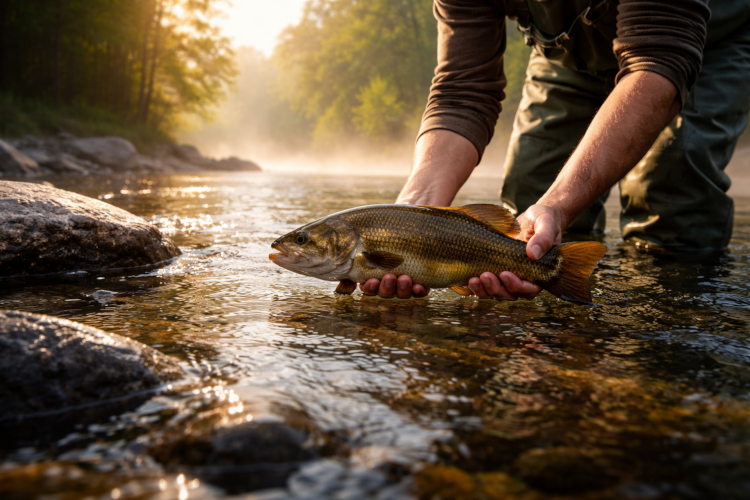
A practical guide to finding and catching smallmouth bass in moving water and rocky lakes using current, structure, lures, and seasonal patterns.
Smallmouth bass are a different animal than their largemouth cousins. Where largemouth sit in weeds, wood, and murky water waiting to ambush, smallmouth prefer current, clean water, and rocky structure. Pound for pound, most anglers consider smallmouth the hardest-fighting freshwater fish in North America. A three-pound smallmouth on light tackle will make you question whether you hooked something twice its size.
Reading Smallmouth Water
Smallmouth bass in rivers and creeks relate to current the same way trout do, but with less precision. They position themselves where current brings food to them without forcing them to burn energy holding position. Look for these key areas:
Current seams. Where fast water meets slow water, a visible line often forms on the surface. Smallmouth hold just on the slow side of that seam, darting into the current to grab anything that drifts by. Cast upstream of the seam and let your bait drift naturally along the edge.
Eddies behind boulders. Any large rock that breaks the current creates a calm pocket behind it. Smallmouth stack up in these pockets, especially when the river is running higher than normal. The bigger the rock, the bigger the eddy, and often the bigger the fish.
Tailouts of pools. Where a deep pool shallows up and the water begins to pick up speed again, smallmouth patrol for crawfish and minnows that get swept out of the deeper water. Wade carefully and cast across the tailout, swinging your bait through the transitional zone.
Ledges and drop-offs. In rocky lakes, smallmouth relate to depth changes the way largemouth relate to weed lines. Points that drop from six feet to fifteen feet, submerged rock humps, and the edges of main-lake structure concentrate smallmouth, especially in summer and fall.
Gear Adjustments
Smallmouth fishing rewards lighter, more sensitive gear than typical largemouth setups. A medium-light to medium-power spinning rod in the 6'6" to 7' range paired with a 2500-size reel is ideal. Spool it with 6 to 8-pound fluorocarbon or 10-pound braid with a fluorocarbon leader. Smallmouth in clear water are more line-aware than largemouth, and the lighter line also allows better bait action in current.
Best Baits for Smallmouth
Ned rig. A small mushroom-head jig (1/16 to 1/4-ounce) paired with a short, buoyant soft plastic stick bait. Drag it slowly across rocky bottom. This is the single most effective smallmouth bait in both rivers and lakes across the country. The subtle presentation and slow fall trigger bites when nothing else works.
Tube jig. Thread a 3 to 4-inch tube onto a 1/4-ounce internal tube jig head. Hop it along the bottom, letting it fall into crevices between rocks. Tubes have been a smallmouth staple for decades because they perfectly mimic crawfish, the smallmouth's favorite food in most waters.
Small crankbaits. Flat-sided crankbaits in the 2 to 2.5-inch range that dive three to six feet are devastating on river smallmouth. Cast them upstream and crank them back, bouncing off rocks. Natural crawfish and shad colors work best.
Topwater. Smallmouth are aggressive topwater feeders, especially in summer mornings and evenings. Small poppers, Zara Spook Juniors, and buzzbait variations all produce explosive surface strikes. Fish them over shallow rock flats and along current seams.
Drop shot. For deeper lake smallmouth, a drop shot rig with a small finesse worm suspended 12 to 18 inches off the bottom is nearly unbeatable. Lower it to rock humps, ledges, and points, and shake it gently. The constant subtle movement drives smallmouth crazy.
Seasonal Patterns
Spring. Smallmouth spawn earlier than most anglers expect, often moving to gravel flats in three to six feet of water when temperatures reach the upper 50s. Males build nests on gravel, and both pre-spawn and spawning bass are aggressive. Focus on shallow gravel areas adjacent to deeper water.
Summer. River smallmouth hold in current breaks and deeper pools during the heat of the day, moving to riffles and shallow runs to feed in low light. Lake smallmouth push to deeper structure, 15 to 30 feet on main-lake points and humps.
Fall. This is prime time. Smallmouth follow baitfish into shallow water and feed aggressively before winter. Creek mouths, rocky flats, and windblown shorelines stack with fish. Cover water with moving baits, including crankbaits, jerkbaits, and spinnerbaits.
Winter. Smallmouth go deep and slow. Vertical presentations near deep rock structure with small jigs or blade baits fished painfully slowly produce the few bites you will get. Winter smallmouth fishing is an exercise in patience.
Wading Tips
Many of the best smallmouth rivers are wade-fishable, which eliminates the need for a boat entirely. Wear studded wading boots or boots with felt soles for traction on slippery rocks. Use a wading staff in unfamiliar water. Move slowly because smallmouth spook easily in shallow rivers, and a careless wader pushes fish downstream before ever making a cast. Wade upstream so your disturbance flows behind you, away from the fish you are approaching.
Smallmouth bass reward anglers who slow down, read the water carefully, and appreciate the places these fish live. Some of the best smallmouth water in the country is free, public, and walkable.
Fishing regulations, seasons, size limits, and safety requirements vary by location. Verify current local rules before fishing.