
Farm Pond Fishing: Finding Bass and Panfish in Small Water
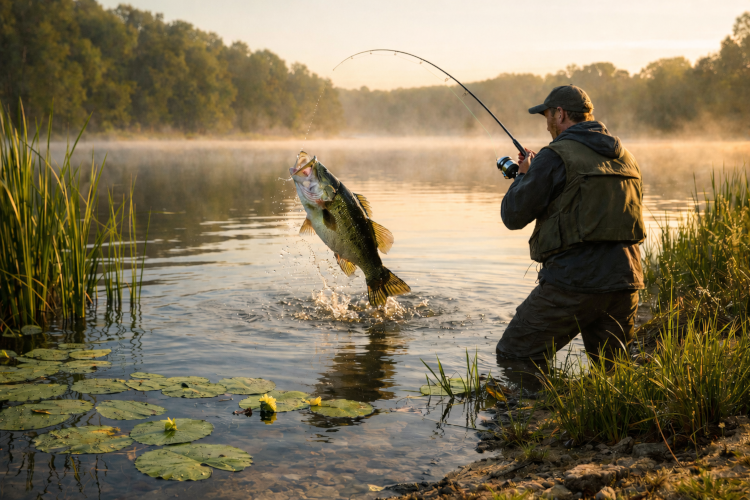
Learn how to break down farm ponds by depth, vegetation, shade, drains, banks, and seasonal movement to catch bass and panfish from small water.
A small pond looks simple until you start fishing it. Then the little differences matter. One corner may have deeper water, another may hold grass, and a single drain pipe, fallen tree, or shaded bank can concentrate most of the fish in the pond. Because the water is compact, a thoughtful angler can learn it quickly.
Start With the Bank You Can Read
Walk the pond before making repeated casts. Look for changes in bank angle, exposed rock, standing timber, grass, inflow, outflow, and shade. A steep bank usually continues into deeper water. A flat bank often means a shallow shelf extends farther from shore.
If the water is clear enough, watch for bluegill beds, cruising bass, or dark patches of vegetation. If it is stained, use surface clues such as insect activity, baitfish flickers, or swirls along the edge.
The Deepest Water Matters More Than It Looks
Many ponds have one area that is noticeably deeper, often near a dam or old creek channel. During summer heat or winter cold, that deeper water can become a refuge. Fish may not sit in the deepest spot all day, but they often stay close enough to move there quickly.
Cast across the transition rather than only toward the middle. A worm, small jig, or slow-moving swimbait can reveal depth changes. Count the lure down and compare how long it takes to reach bottom on different casts.
Vegetation Is Both Cover and Food
Grass supports insects, small fish, and other forage. Bass use the edges as ambush points while bluegill move through openings and pockets. The key is not to cast randomly into the thickest growth. Focus on edges, points, holes, and places where two types of vegetation meet.
Light tackle is often enough. A simple spinning outfit can handle bluegill, crappie, and most pond bass. For affordable reels and general tackle, anglers can compare Piscifun fishing gear or browse KastKing tackle.
Shade Can Be a Midday Pattern
Trees, docks, brush, and steep banks create shade that becomes more important as the sun rises. A shallow corner that looks empty in the morning can become productive once the bank is shaded.
Cast beyond the shade line and bring the lure into the darker water. Keep the presentation quiet. Small ponds magnify noise because fish are rarely far from the bank.
Panfish Tell You Where the Pond Is Alive
Bluegill and other panfish are not just targets. They are also forage. If you consistently find small panfish near a weed edge, drain, or shallow point, larger bass may be nearby.
A compact selection of hooks, floats, small jigs, and soft plastics makes it easy to switch between species. FishVault and Sportsman’s Warehouse are approved affiliate resources for comparing fishing supplies without turning a simple pond trip into a gear haul.
Pressure Changes Small Ponds Quickly
A pond that is fished every day behaves differently from one that sees a few anglers each month. Heavily pressured fish may avoid obvious shoreline cover, respond better to smaller lures, or feed during lower-light periods.
Change your angle before changing everything else. If everyone casts from the dam toward the center, walk to the opposite bank and fish the same structure from the other direction. Sometimes the presentation looks completely different to the fish.
Get Permission and Protect the Water
Many farm ponds are private. Ask permission, follow the owner's rules, close gates, avoid livestock areas, and leave no trash. Do not move fish from one pond to another without proper authorization because disease and unwanted species can be spread unintentionally.
Small water teaches big lessons. Because the pond is manageable, you can watch how fish respond to weather, shade, pressure, and seasonal change. Learn those patterns in a farm pond and you will recognize the same principles on much larger lakes.
Related Fishing Guides
Fishing regulations, access rules, seasons, size limits, and safety requirements vary by location. Verify current local rules before fishing.