
Fishing Riprap: How Rock Banks Hold Fish Year-Round
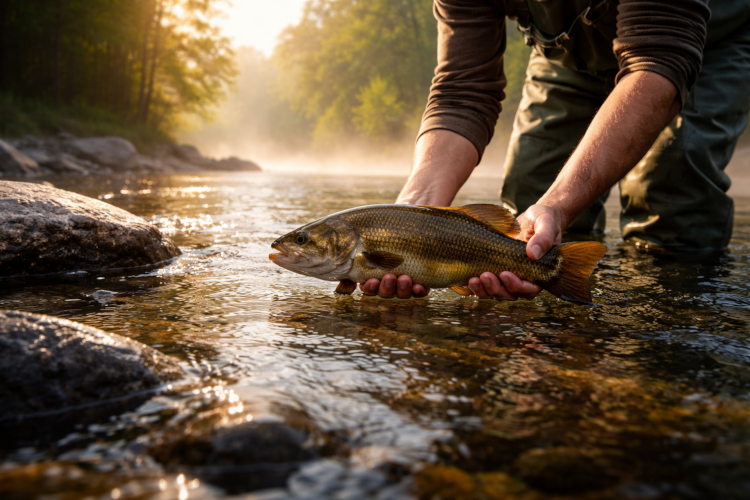
Fish riprap banks by targeting rock transitions, depth changes, wind, shade, current, and forage throughout the year.
Riprap is one of the easiest structures to recognize and one of the easiest to fish poorly. Long stretches of rock can all look the same from a distance, but fish usually concentrate where the rock changes size, depth, angle, or relationship to current.
Find the Change in Rock Size
A transition from small rock to large boulders creates gaps and edges. Crawfish, insects, and baitfish use those openings, and predators use the transition as a feeding area.
Slow down when the bank changes texture. Make several casts from different angles before moving on.
Fish Parallel to the Bank
A cast parallel to riprap keeps the lure in the strike zone for most of the retrieve. This is especially useful when fish are shallow.
Crankbaits, small swimbaits, jigs, spinnerbaits, and soft plastics can all be effective. Keep the lure close enough to contact the rock occasionally without wedging into every gap.
Depth Changes Are Hidden in the Slope
Some riprap drops quickly into deep water. Other sections extend as a shallow shelf. Fish may use the steeper bank during temperature extremes and the shallow shelf during active feeding periods.
A jig or bottom-contact bait can help you feel the slope. Count how long it takes to reach bottom and note where the angle changes.
Wind and Current Add Value
Wind pushes forage against riprap, while current brings food past bridge abutments and dam faces. Either factor can make one section much better than another.
Choose lures that maintain control in the conditions. For reels, line, and tackle suited to working rock, Piscifun, KastKing, and Sportsman’s Warehouse are approved affiliate resources.
Shade Can Create a Short Window
Bridges, trees, and the angle of the bank can create pockets of shade along riprap. On bright days, fish may position where the shaded rocks meet direct sun.
The pattern can move during the day. If one shaded section produces, look for another section with the same light angle instead of staying on a bank after the shade disappears.
Expect Snags and Prepare for Them
Rock eats tackle. Use enough weight to stay in contact but not so much that the lure wedges constantly. Keep the rod tip high when crawling a rig through large gaps and learn to shake a snag loose before pulling hard.
Carry spare hooks, weights, and leader. FishVault is an approved source for fishing gear and storage that can help keep terminal tackle organized during repeated reties.
Riprap Is a Seasonal Connector
In spring, warming rock can attract shallow forage. In summer, deeper edges provide access to cooler water. In fall, baitfish can collect on windblown rock. In winter, steep riprap offers quick movement between depths.
The rocks are always there, but the most productive part changes. Fish the transitions instead of the uniform stretches, and riprap becomes a year-round pattern rather than a last-resort bank.
Related Fishing Guides
Fishing regulations, access rules, seasons, size limits, and safety requirements vary by location. Verify current local rules before fishing.