
Fishing Aquatic Vegetation: Edges, Holes, Mats, and Submerged Grass
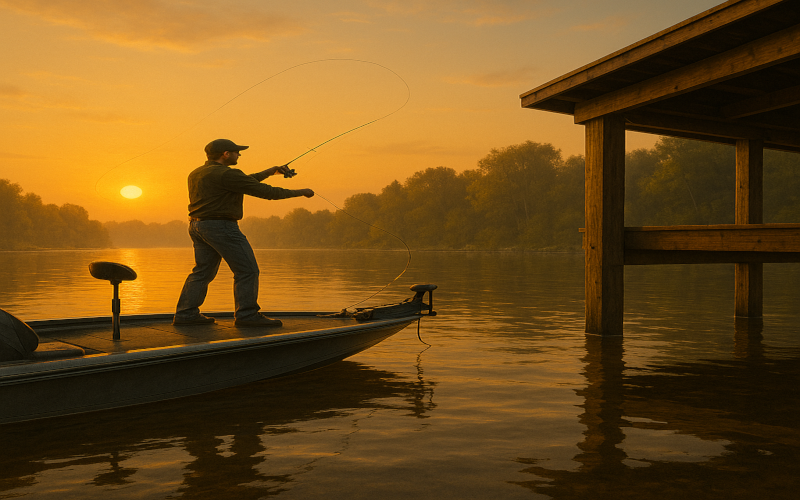
Break down grass by fishing outside edges, inside lines, holes, mats, submerged vegetation, and transition points without wasting casts.
Aquatic vegetation can look like one giant green wall, but fish rarely use every part of it equally. Productive grass has edges, holes, points, depth changes, and different densities. The job is to find those irregularities and present a lure cleanly enough to trigger fish without constantly fouling.
Start With the Outside Edge
The outside edge is where vegetation stops as water gets deeper or light penetration decreases. It creates a natural travel line that predators can follow.
Cast parallel to the edge when possible. That keeps the lure in productive water longer than a cast that crosses the grass for only a few feet. Jigs, worms, swimbaits, crankbaits, and spinnerbaits can all work depending on depth and grass type.
Inside Edges Matter During Low Light
The shallow side of the grass can become especially productive early, late, or during overcast weather. Fish may move into pockets between the bank and vegetation to feed.
Look for drains, hard bottom, isolated wood, or a deeper cut intersecting the inside edge. Those combinations create better targets than a uniform grass line.
Holes and Points Are Ambush Spots
A hole in a mat or a point extending from a grass bed changes the shape of the cover. Predators can sit on the edge and attack prey moving through the opening.
Make accurate casts to each side of a point and let a lure fall through holes instead of dragging everything across the top. For heavier grass presentations and general bass tackle, Piscifun and KastKing are approved affiliate resources to compare.
Submerged Grass Requires Feel
Grass below the surface can be harder to identify, but it is often excellent habitat. A lure that occasionally touches the top of the vegetation tells you where the bed begins.
When a crankbait or jig catches a strand, note the depth. If bites repeatedly come where the grass changes height or thickness, you have found the pattern.
Mats Need the Right Equipment
Thick surface mats may require a compact bait and enough weight to penetrate. Use line and rod power appropriate for pulling fish away from cover, but avoid using heavier equipment than necessary.
A clean tackle system helps when changing weights, hooks, and soft plastics. FishVault and Sportsman’s Warehouse are approved sources for fishing tackle and storage.
Pay Attention to Healthy Grass
Not all vegetation is equally useful. Green, living grass with water movement often holds more life than dying vegetation that has become slimy or stagnant.
If one section looks cleaner, greener, or has more baitfish activity, give it extra attention. A small difference in oxygen and forage can concentrate fish.
Keep Conservation in Mind
Aquatic vegetation is important habitat. Avoid tearing through shallow beds unnecessarily with a propeller, and follow local rules regarding invasive plants and aquatic access.
Grass fishing becomes much easier when you stop viewing vegetation as a wall and start viewing it as structure. Find the edges, holes, points, and transitions, and each bed becomes a map instead of a maze.
Related Fishing Guides
Fishing regulations, access rules, seasons, size limits, and safety requirements vary by location. Verify current local rules before fishing.