
Creek Fishing for Small-Water Bass and Panfish
Catch bass and panfish in creeks by reading pools, riffles, undercut banks, current breaks, shade, and low-water access.
Creeks compress fishing into a series of obvious decisions. A pool, riffle, root wad, undercut bank, or shaded bend may be only a few yards long, but each one can hold fish. Because the water is small, stealth and approach matter as much as lure choice.
Begin at the Downstream Edge
When possible, work upstream. Fish generally face into current, and approaching from behind makes it less likely that you will push a wake, mud, or shadow over the water they are watching.
Stay back from clear pools and avoid walking along the highest part of the bank where your silhouette is obvious. In tight water, one careless step can empty the best target before you cast.
Pools Hold More Than the Deepest Hole
The head of a pool receives fresh food from the riffle. The center provides depth. The tailout gives fish a place to intercept food before it leaves. Fish all three zones instead of throwing directly to the deepest spot every time.
Small jigs, inline spinners, soft plastics, tiny crankbaits, and live bait can all work. Use enough weight to control the presentation but not so much that it drops unnaturally through shallow current.
Undercut Banks Are Prime Cover
Current erodes the bank and creates pockets beneath roots, grass, and soil. Fish use these undercuts as shade and ambush cover. Cast from an angle that lets the lure travel along the bank rather than pulling immediately away from it.
A short rod can be easier in brushy creeks, while a light spinning reel keeps small lures manageable. Anglers comparing compact setups can browse Piscifun fishing gear or review KastKing tackle options.
Riffles Feed the Next Piece of Water
Shallow riffles may look too fast to hold fish, but the edges and pockets between rocks can be productive. More importantly, riffles deliver oxygen and food to the pool below.
Watch where the fastest water enters the slower section. The first rock, log, or bank irregularity that breaks the flow can create a feeding station. Make short, controlled casts and let the lure move naturally with the current.
Wade Only When It Is Safe
Creek bottoms can change from firm gravel to deep silt in one step. Rocks may be slick, and a shallow crossing can become dangerous after rain. If wading is part of the trip, use suitable footwear and never assume familiar water will be the same after a storm.
TideWe is an approved affiliate option for waders and outdoor gear, while XtraTuf offers fishing-oriented footwear. Gear helps with traction and comfort, but judgment remains the first safety tool.
Carry a Small, Durable Kit
Creek fishing is a poor place for a giant tackle bag. Brush, steep banks, and repeated crossings reward a compact setup. Carry a few proven lures, spare leader, hooks, split shot, pliers, and a small first-aid kit.
For compact fishing storage and terminal tackle, FishVault and Sportsman’s Warehouse are approved resources. The best kit is one you can carry while keeping both hands available when climbing or crossing.
Release Fish With Care
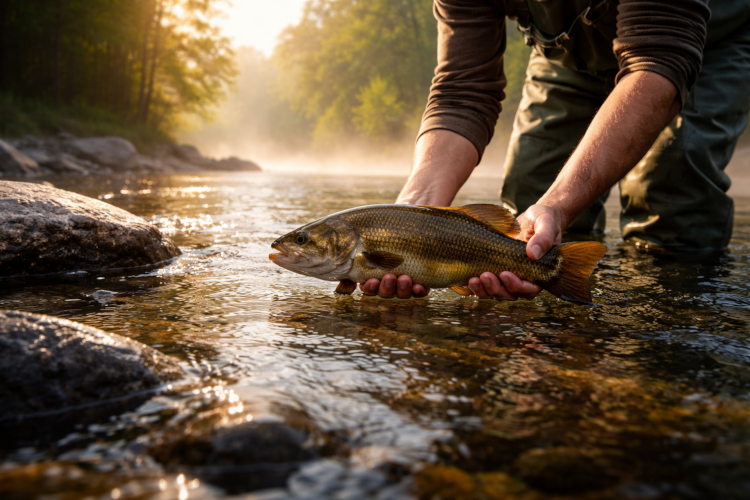
Small creeks can have limited populations, especially during low water. Handle fish with wet hands, minimize time out of water, and follow local harvest rules. In hot weather, low flows can stress fish, so quick releases become even more important.
Creek fishing is close-range fishing. You see how current moves, how fish use shade, and how quickly a pool changes after rain. Those lessons transfer directly to rivers and larger lakes, but in a creek they are concentrated into a few steps at a time.
Related Fishing Guides
Fishing regulations, access rules, seasons, size limits, and safety requirements vary by location. Verify current local rules before fishing.