
Cold Front Fishing: Slowing Down When the Bite Gets Tough
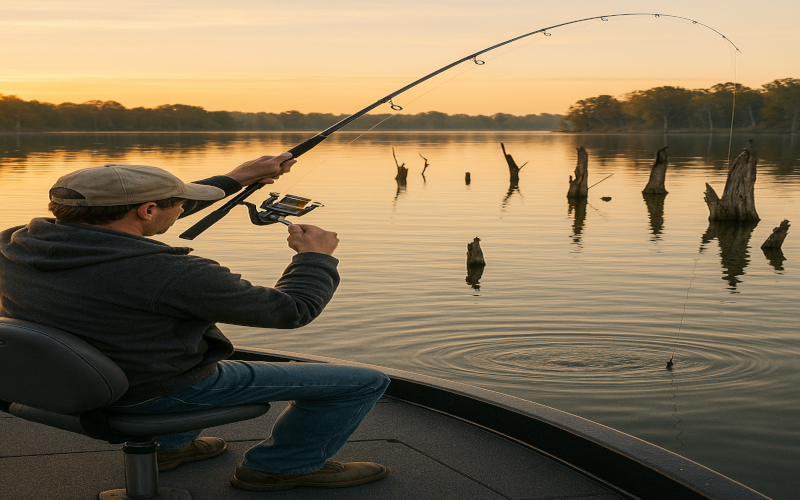
Handle post-front fishing by adjusting location, depth, lure speed, profile, and expectations when bright skies and falling temperatures make fish less aggressive.
A cold front can make a good fishing pattern disappear overnight. Wind changes direction, skies clear, air temperature drops, and fish that were chasing bait may suddenly feel glued to cover. The mistake is assuming the fish left the lake. They usually changed position and willingness to move.
Start Near the Last Productive Area
If fish were feeding on a flat, point, grass edge, or shallow bank before the front, begin nearby instead of running across the lake. Post-front fish often slide to the closest deeper water or tighten to nearby cover.
Fish the first drop, outside grass edge, dock piling, brush line, or deeper side of the same structure. Small changes in depth can be enough.
Reduce Speed Before Reducing Confidence
Cold-front fishing rewards patience. A lure that was ripped or burned the day before may need to pause, crawl, or fall naturally after the front.
Try a jig, finesse worm, small swimbait, drop-shot style presentation, or live bait depending on species. Make multiple casts to high-quality cover. A fish that will not chase five feet may still bite something that remains in its strike zone.
Downsize With a Purpose
Smaller lures are not magic. They help when fish are reluctant to spend energy or when clear skies make them more cautious. Downsize enough to reduce intimidation while keeping the lure heavy enough to maintain control.
Smooth drag and light line matter when using smaller presentations. Piscifun and KastKing are approved affiliate resources for comparing reels and tackle that fit finesse-oriented fishing.
Use Cover as a Confidence Target
Bright post-front sun often pushes fish tighter to shade, rock, wood, grass, or dock cover. Instead of fishing broad areas, make precise casts to the best part of each piece of cover.
On rocky water, focus on the darker side of a boulder or the base of a drop. In grass, work the outside edge and isolated clumps. Around docks, target the deepest shade.
Watch the Afternoon Warm-Up
A cold morning does not mean the entire day will fish the same way. Sun can warm protected banks, dark rock, shallow pockets, and marina water. A two-degree change may be enough to increase activity.
Revisit shallow cover later in the day instead of assuming the morning pattern will hold. If baitfish move up, predators may follow.
Keep the Tackle Simple
Tough conditions tempt anglers to change lures constantly. That can prevent you from learning anything. Choose a few presentations that cover different depths, then change location, speed, and angle methodically.
FishVault and Sportsman’s Warehouse are approved sources for tackle and storage, but the cold-front lesson is restraint. You rarely need twenty lure categories to solve one difficult day.
Reset the Goal
Post-front fishing may produce fewer bites. That makes each good decision more important. Focus on identifying the highest-percentage water and fishing it carefully rather than racing through the lake looking for the previous day's action.
Cold fronts are useful teachers because they force anglers to separate location from activity. The fish are still there. Find the nearest secure cover, slow down, and give them a presentation they can eat without traveling far.
Related Fishing Guides
Fishing regulations, access rules, seasons, size limits, and safety requirements vary by location. Verify current local rules before fishing.