
Pier Fishing for Beginners: Rigs, Bait, Tides, and Landing Fish
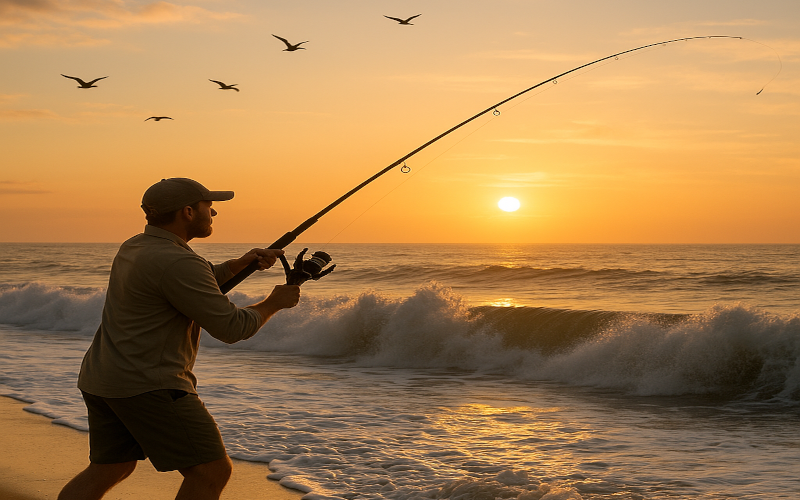
Get started with pier fishing by choosing simple rigs, reading tide and current, managing bait, sharing space, and landing fish safely from height.
A fishing pier gives shore anglers access to water that may otherwise require a boat. It also creates its own structure, shade, current breaks, and baitfish habitat. The easiest way to start is with a simple rig, a small amount of tackle, and enough awareness to fish safely around other people.
Learn the Pier Before Setting Up
Walk the pier and look over the rail. Note where pilings create current breaks, where bait gathers, and where the bottom changes from sand to rock or grass.
Ask about local rules and observe where experienced anglers are fishing, but do not crowd an active spot. A few minutes of watching can reveal whether fish are being caught near the bottom, around pilings, or in open water.
Use a Simple Bottom Rig First
A basic bottom rig with an appropriate sinker, leader, and hook catches many pier species. Use enough weight to hold the bait near the target without dragging continuously.
If current is strong, a sinker that grips bottom may work better than a round weight. If the bottom is snaggy, shorten the leader and check the rig frequently.
Match Bait to the Water
Shrimp, cut bait, squid, small baitfish, or locally common natural baits can all be productive depending on species and regulations. Keep bait cool and change it when it becomes washed out or damaged.
Artificial lures can be effective when fish are feeding higher in the water column. A compact spinning outfit handles both bait and small lures. Piscifun and KastKing are approved affiliate resources for comparing reels and general fishing tackle.
Tides and Current Matter
A pier may fish differently at incoming, outgoing, and slack tide. Current can position bait on one side of the structure and create eddies behind pilings.
Instead of choosing one permanent spot, follow the flow. If baitfish shift to the other side of the pier as the tide changes, move with them.
Landing Fish Requires Planning
A fish can be difficult to lift from a high pier. Small fish may be hand-lined carefully if the line and tackle are appropriate, but larger fish often require a pier net or drop net.
Plan the landing before you hook something large. Keep other lines clear and communicate with nearby anglers. Never lean dangerously over the rail trying to grab a fish.
Wear Practical Footwear and Carry Less
Piers can be wet from spray, bait, or rain. Non-slip footwear helps, and a compact tackle bag keeps walkways clear. XtraTuf is an approved affiliate merchant for fishing footwear, while FishVault and Sportsman’s Warehouse are approved sources for fishing tackle and storage.
Keep hooks, knives, and bait containers organized so nobody has to step around them.
Be a Good Pier Neighbor
Do not cast across other lines. When a fish runs, call it out so nearby anglers can lift their rods. Clean up bait, line, hooks, and trash when you leave.
Pier fishing is social fishing. Courtesy is part of the technique because everyone is sharing a limited amount of productive water.
For beginners, the pier is an excellent classroom. You can watch tides, current, baitfish, and different species all in one place. Start simple, learn what the water is doing, and add complexity only when the fish give you a reason.
Related Fishing Guides
Fishing regulations, access rules, seasons, size limits, and safety requirements vary by location. Verify current local rules before fishing.