Disclaimer: This post may have affiliate links. As an Amazon Associate, I earn from qualifying purchases.
How to Target Smallmouth Bass in Rivers, Creeks, and Rocky Lakes
January 11, 2026 - Reading time: 46 minutes
Learn how to target smallmouth bass in rivers, creeks, and rocky lakes using proven locations, lures, seasonal patterns, and beginner-friendly tactics.
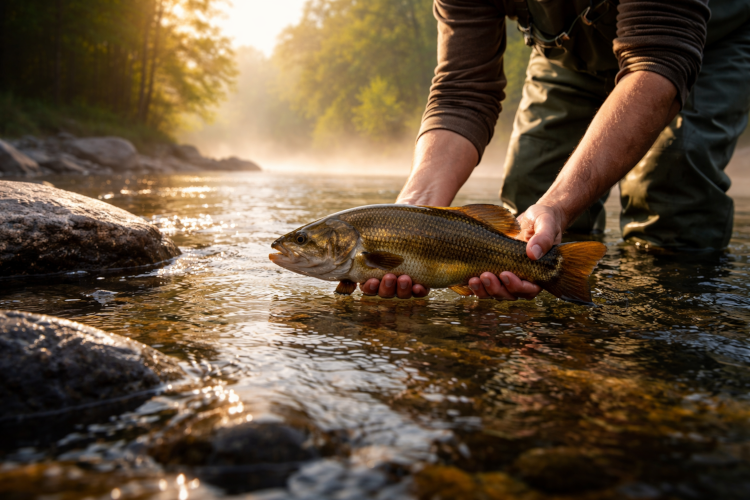
If largemouth bass are the bullies of the bass world, smallmouth bass are the street fighters.
They’re stronger for their size, live in places that look unfishable at first glance, and they fight like they’re permanently offended that you hooked them. Rivers, creeks, and rocky lakes are smallmouth country and once you figure them out, they’ll absolutely ruin other bass fishing for you.
The problem? Most beginner bass advice is written for calm ponds and weed-filled lakes. Smallmouth don’t play by those rules.
This guide breaks down exactly how to target smallmouth bass in flowing water and rock-dominated lakes without overthinking it or hauling a truckload of gear.
Understanding Smallmouth Bass Behavior (Why They Live Where They Do)
Smallmouth bass are current-loving, rock-oriented predators. Unlike largemouth, they don’t rely heavily on vegetation for cover. Instead, they use:
- Rocks
- Current seams
- Depth changes
- Hard-bottom structure
Key traits that matter for anglers:
- They prefer cooler, clearer water
- They hold position efficiently in current
- They feed heavily on crayfish, minnows, and aquatic insects
- They fight harder than largemouth of the same size
Tweetable: “Find rocks, current, and oxygen and you’ll find smallmouth.”
Where Smallmouth Bass Live (And Why Location Matters More Than Lures)
If you remember nothing else from this article, remember this:
Smallmouth bass are almost never random.
Rivers and Creeks: Prime Smallmouth Water
In moving water, smallmouth position themselves where they can eat without working too hard.
Look for:
- Current breaks (behind boulders, logs, bridge pilings)
- Eddies where fast and slow water meet
- Riffle-to-pool transitions
- Outside bends with deeper water
- Rocky runs with scattered cover
Smallmouth face upstream, letting food come to them. Cast upstream or across current and let your lure drift naturally.
Rocky Lakes: Offshore Structure Rules
In natural lakes and reservoirs, smallmouth relate to:
- Rocky points
- Gravel flats
- Submerged boulders
- Breaklines near deep water
- Wind-blown shorelines
Clear water is common, which means stealth and natural presentations matter.
Best Time to Catch Smallmouth Bass
Smallmouth can be caught year-round, but they shine during certain windows.
Best Times of Day
- Early morning
- Late afternoon into evening
- Cloudy or windy conditions
Best Seasons
Spring:
Pre-spawn through spawn is prime time. Fish shallow, slow, and deliberate.
Summer:
Early morning and evening dominate. During midday, fish deeper runs and shaded areas.
Fall:
Feeding aggressively before winter. This is trophy season.
Winter:
Still catchable in rivers with slow, deep presentations.
Essential Gear for Smallmouth Bass Fishing
You don’t need specialized or expensive equipment but you do need gear that handles rocks, current, and repeated casting.
For anglers building a reliable setup without overpaying, Sportsman’s Warehouse bass fishing gear offers rods, reels, and terminal tackle suited specifically for smallmouth water.
Rod and Reel Setup
Spinning gear is king for smallmouth.
Recommended setup:
- Rod: 6’6”–7’ medium or medium-light
- Action: Fast
- Reel: 2500–3000 size spinning reel
Budget-friendly, river-tough options like KastKing spinning rods and reels for bass fishing perform well in rocky environments without heartbreak when they get scratched.
Fishing Line
- 6–10 lb monofilament or fluorocarbon
- Light braid with a fluoro leader once experienced
Lighter line equals more bites in clear water.
The Best Lures for Smallmouth Bass (Simple and Proven)
You don’t need dozens of lures. You need the right few.
Soft Plastic Tubes (The Smallmouth Staple)
If smallmouth had a favorite food, it would be a crawfish and tubes imitate them perfectly.
- Natural colors: green pumpkin, brown, goby
- Drag or hop along rocky bottoms
- Deadly in rivers and lakes
Ned Rigs
Small, subtle, and incredibly effective.
- Best in clear water
- Ideal for pressured fish
- Fish it slow, painfully slow
Inline Spinners
Perfect for creeks and small rivers.
- Easy to cast
- Trigger reaction strikes
- Excellent for beginners
Crankbaits (Shallow and Medium Diving)
- Use in rocky flats and points
- Bump bottom and deflect off rocks
- Vary retrieve speed
Jerkbaits
Suspending jerkbaits shine in cooler water.
- Twitch-pause-reel
- Longer pauses = more bites
- Deadly in spring and fall
Reliable tackle and finesse gear from Piscifun smallmouth-ready reels and accessories are especially useful when fishing light lures in current.
How to Fish Rivers and Creeks for Smallmouth
Fish Upstream Whenever Possible
Casting upstream allows your lure to drift naturally with the current exactly how food moves.
Work From Shallow to Deep
Start shallow near riffles, then move into pools and deeper runs.
Read the Water
Look for:
- Foam lines
- Current seams
- Subtle depth changes
- Rock clusters
Smallmouth will stack in these areas.
Fishing Rocky Lakes for Smallmouth Bass
In lakes, smallmouth roam more but they still rely on structure.
Focus on Transitions
- Rock to sand
- Shallow to deep
- Calm to wind-blown
Wind pushes baitfish. Smallmouth follow.
Use Your Electronics or Your Eyes
Clear water often allows you to visually spot structure. Polarized sunglasses help immensely.
Footwear and Wading Safety (Often Overlooked, Always Important)
Rocky rivers chew up cheap footwear and slippery banks cause injuries fast.
Durable, waterproof options like XtraTuf fishing boots or Muck Boots for wet and rocky conditions make a real difference when wading or bank fishing uneven terrain.
Common Smallmouth Mistakes to Avoid
- Fishing too fast
- Ignoring current direction
- Using oversized lures
- Standing where fish can see you
- Skipping water reading
Smallmouth reward precision and patience.
Catch and Release Best Practices
Smallmouth populations thrive when handled correctly.
- Wet hands before handling
- Support the fish horizontally
- Minimize air exposure
- Release into calm water
Healthy fish = better fishing tomorrow.
Why Smallmouth Bass Are Worth the Effort
Smallmouth bass fishing is thinking-person fishing. It teaches you to read water, slow down, and trust subtle signals.
Focus on:
- Rocks over weeds
- Current over still water
- Presentation over lure quantity
Once it clicks, smallmouth will become the fish you judge all others by.
If you’re slowly upgrading your setup, Piscifun and KastKing smallmouth gear are smart, affordable ways to improve performance without jumping to premium pricing.
Author Bio
Earnest Sherrill is an outdoor writer and lifelong freshwater angler who specializes in beginner-friendly fishing education. He focuses on practical, experience-based advice that helps anglers catch more fish without unnecessary gear or gimmicks. When he’s not fishing rivers and rocky lakes for smallmouth bass, he’s helping readers build confidence on the water one cast at a time.
Hunting & Fishing Life - All-season outdoors living, guides, and gear reviews.
HookdLife - Outdoor stories, gear talk, and the hooked life culture.
Country Redneck - Country grit, humor, and real-life outdoor living.
Coffee & Grits - Southern mornings, hard work, and good coffee.
WolvesTale - Frontier tales and wilderness fiction inspired by the wild.
MTDLN Media Group - Explore our full outdoors and storytelling network.
Advertise With Us