Disclaimer: This post may have affiliate links. As an Amazon Associate, I earn from qualifying purchases.
Catfish 101: Day vs. Night, Baits, Depth, and Structure
January 25, 2026 - Reading time: 14 minutes
Learn how to catch catfish consistently by understanding day vs. night behavior, the best baits, ideal depths, and the structure catfish relate to year-round.
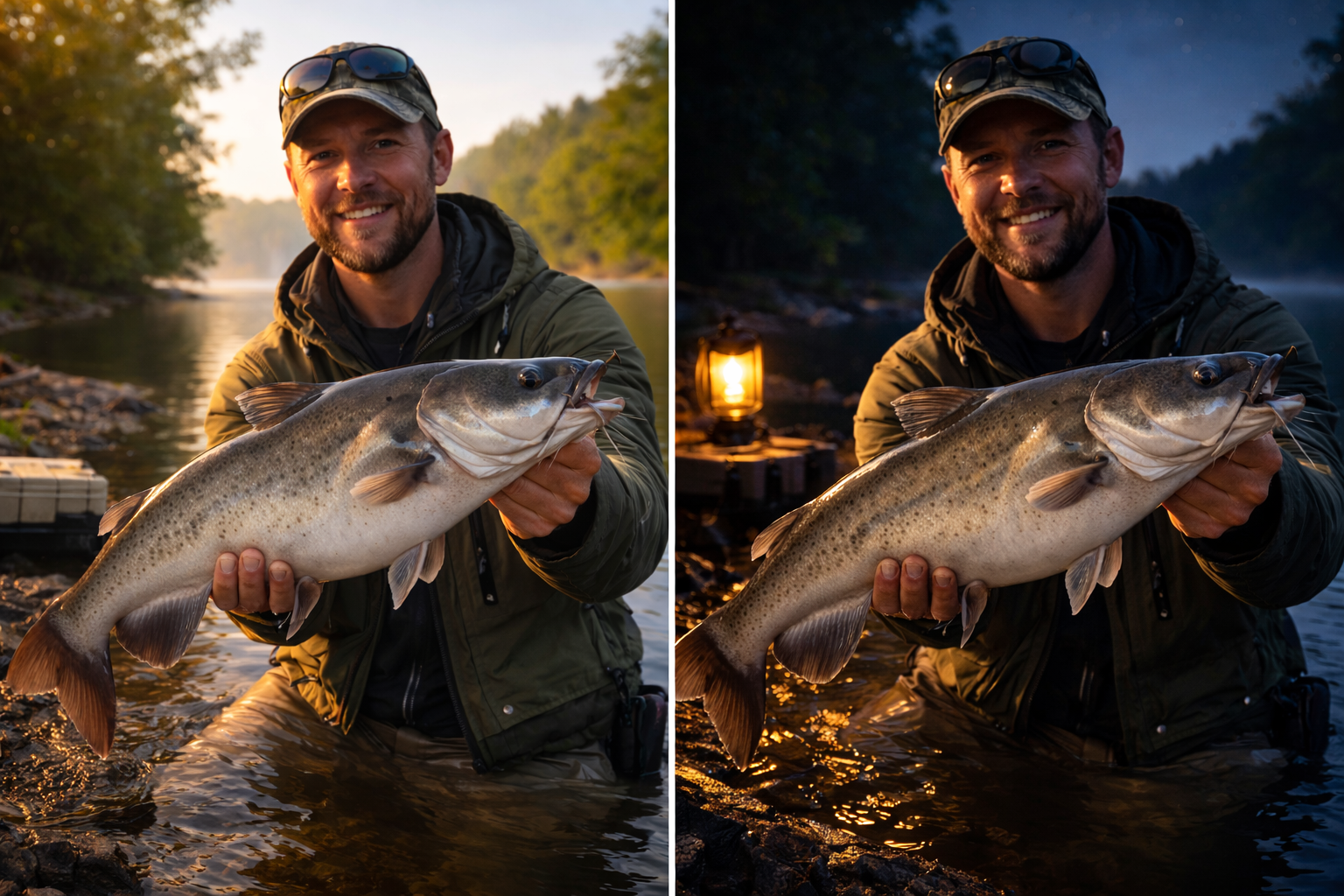
Catfish are often labeled as simple fish to catch and in some ways, they are. They live in nearly every freshwater system, grow large, and will eat a wide range of baits. Yet many anglers struggle to catch catfish consistently, especially larger fish, because they misunderstand when catfish feed, where they hold, and how they relate to structure and depth.
Catfish are not random feeders. They are efficient predators and scavengers that move with purpose based on light, current, temperature, and food availability. Once you understand their behavior, catfish fishing becomes far more predictable.
This guide breaks down catfish fundamentals day vs. night behavior, the best baits, how deep to fish, and what structure consistently holds fish so you can catch catfish with intention rather than luck.
Understanding catfish behavior (the foundation)
All catfish species channel catfish, blue catfish, and flatheads share a few key traits:
-
Highly developed sense of smell and taste
-
Preference for structure and bottom-oriented travel
-
Strong response to current and water movement
-
Energy-efficient feeding habits
Their famous whiskers (barbels) are loaded with taste receptors, allowing catfish to locate food in low visibility and muddy water. This is why bait choice, placement, and timing matter more than flashy presentations.
Day vs. Night Catfishing: What Actually Changes?
Are catfish nocturnal?
Catfish are not strictly nocturnal, but they are low-light opportunistic feeders. The biggest difference between day and night fishing is how far catfish are willing to move to feed.
Daytime catfish behavior
During the day, catfish tend to:
-
Hold tighter to structure
-
Stay deeper or shaded
-
Feed opportunistically rather than aggressively
Prime daytime locations:
-
Deep holes
-
Channel edges
-
Under cut banks
-
Heavy cover (logs, riprap, bridge pilings)
Day fishing rewards precision and patience.
Nighttime catfish behavior
At night, catfish:
-
Move shallower
-
Travel farther from cover
-
Feed more actively
Prime nighttime locations:
-
Shallow flats adjacent to deep water
-
Shorelines
-
Creek mouths
-
Sandbars and feeding shelves
Night fishing rewards location and bait scent more than exact placement.
Key takeaway:
Day = fish tight to structure
Night = fish feeding zones near structure
Best Catfish Baits (And When to Use Them)
Catfish baits fall into two categories: natural baits and prepared baits. Each has a time and place.
Natural baits (top producers)
Cut bait (BEST for big catfish)
-
Shad
-
Skipjack herring
-
Bluegill (where legal)
Best for:
-
Blue catfish
-
Flatheads
-
Big channel cats
Cut bait produces strong scent trails, especially effective in moving water.
Live bait
-
Bluegill
-
Bullheads
-
Shad
Best for:
-
Flathead catfish
-
Trophy hunters
Live bait excels when targeting fewer but larger fish.
Worms and insects
-
Nightcrawlers
-
Red worms
Best for:
-
Channel catfish
-
Small rivers, ponds, and lakes
-
Beginner anglers
Prepared baits (convenient and effective)
Stink bait / dough bait
Best for:
-
Channel catfish
-
Still water
-
Warm conditions
Prepared baits work well when fish are actively feeding and water temperatures are stable.
Gear Tip:
Having multiple bait options allows you to adapt quickly.
Get Catfish Gear & Bait Storage:
Sportsman’s Warehouse carries cut-bait rigs, hooks, dip bait tubes, and bait containers.
Catfish Depth: How Deep Should You Fish?
There is no universal “catfish depth.” Depth changes with season, time of day, and water conditions.
Shallow water (2–8 feet)
-
Best at night
-
Productive in spring and fall
-
Ideal near flats and feeding shelves
Mid-depth (8–20 feet)
-
Transitional zones
-
Channel edges
-
Prime daytime locations
Deep water (20+ feet)
-
Summer heat
-
Winter cold
-
High-pressure days
Catfish often sit just off the bottom, not buried in it.
Structure: Where Catfish Actually Live
Structure is the single most important factor in consistent catfish success.
High-percentage catfish structure
River channels and bends
-
Outside bends hold deeper water
-
Current brings food
-
Fish stack predictably
Drop-offs and ledges
-
Travel routes
-
Feeding ambush points
Timber and log jams
-
Shade
-
Cover
-
Baitfish protection
Riprap and bridges
-
Heat retention
-
Current breaks
-
Forage concentration
Catfish use structure as both resting areas and feeding stations.
Rigs That Consistently Catch Catfish
Slip sinker rig (MOST VERSATILE)
-
Allows fish to take bait naturally
-
Excellent for lakes and rivers
Three-way rig
-
Ideal for strong current
-
Keeps bait just off bottom
Float rig (night fishing)
-
Great for shallow flats
-
Keeps bait visible and scent-dispersing
Grab your Rods, Reels & Line:
Piscifun and KastKing offer strong, affordable catfish combos built for heavy fish and current.
Seasonal Catfish Adjustments (Quick Guide)
Spring
-
Shallow movement
-
Pre-spawn feeding
-
Focus on warming areas
Summer
-
Deep water daytime
-
Nighttime shallows
-
Cut bait excels
Fall
-
Aggressive feeding
-
Channel edges and flats
-
One of the best seasons
Winter
-
Deep holes
-
Slow presentation
-
Smaller baits
Common Catfishing Mistakes
-
Fishing too shallow during the day
-
Ignoring structure
-
Using hooks that are too small
-
Not adjusting bait size
-
Sitting too long in unproductive water
Catfish are predictable but only if you move with them.
The Biggest Catfish Advantage Most Anglers Miss
Catfish travel edges, not open water.
If you fish:
-
the edge of a flat
-
the edge of a channel
-
the edge of current
You dramatically increase your odds.
Catfish are one of the most accessible and rewarding freshwater species, but consistent success comes from understanding behavior, timing, depth, and structure, not just bait choice.
Master the fundamentals, and catfish fishing stops being guesswork and starts becoming reliable.
✅ FishermensLife.com Article COMPLETE
If you’d like, next I can:
-
Write the author bio footer for this article
-
Create a featured image prompt or 16:9 hero image
-
Move to the next FishermensLife weekly article
-
Proceed to Spreadsheet #4
Just tell me how you’d like to continue.
Hunting & Fishing Life - All-season outdoors living, guides, and gear reviews.
HookdLife - Outdoor stories, gear talk, and the hooked life culture.
Country Redneck - Country grit, humor, and real-life outdoor living.
Coffee & Grits - Southern mornings, hard work, and good coffee.
WolvesTale - Frontier tales and wilderness fiction inspired by the wild.
MTDLN Media Group - Explore our full outdoors and storytelling network.
Advertise With Us