
Pike and Musky: Big Predators, Big Gear, and Safe Handling
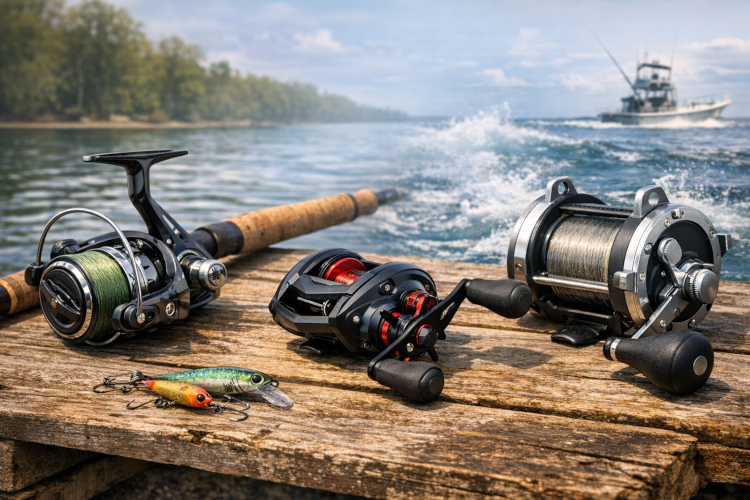
Big Predators, Big Gear, and Safe Handling
Northern pike and muskellunge are the apex predators of freshwater. They are built to ambush, with torpedo-shaped bodies, explosive acceleration, and mouths full of teeth sharp enough to cut monofilament like thread. Hooking one is a rush. Landing one safely, for both you and the fish, requires preparation, proper equipment, and a healthy respect for what is on the end of your line.
Knowing the Difference
Pike and musky occupy similar ecological niches and share many behaviors, but they are distinct species with different temperaments.
Northern pike. They are more abundant, more aggressive, and more willing to eat whatever you put in front of them. They average 3 to 10 pounds in most waters, with trophy fish exceeding 20 pounds. Pike hit fast and hit often.
Muskellunge, or musky. They are rarer, larger, and far more selective. They are often called the fish of 10,000 casts because of how difficult they can be to trigger. But when a 40- or 50-inch musky finally commits, it is one of the most violent strikes in freshwater fishing. Trophy musky commonly exceed 30 pounds, with fish over 50 pounds caught annually in prime waters.
Both species share one critical trait: they are toothy predators that require heavy leaders, large baits, and careful handling.
At-A-Glance Comparison
Gear That Matches the Fish
Standard bass or walleye tackle is inadequate for dedicated pike and musky fishing. These fish require heavier gear for two reasons: the baits are large and heavy, and the fish themselves are powerful enough to straighten light hooks and snap light line.
Rods. Use heavy to extra-heavy casting rods in the 7- to 8-foot, 6-inch range. Longer rods help cast large baits, control fish near the boat, and execute figure-eight maneuvers at boatside. This critical musky technique traces a wide figure-eight pattern with the bait beside the boat to trigger following fish.
Reels. Choose large baitcasting reels with strong drag systems. They must handle 50- to 80-pound braided line and retrieve large baits without burning out the gears.
Line. Use 50- to 80-pound braided main line. No exceptions. Pike and musky teeth shred anything lighter.
Leaders. This is non-negotiable. Use a 12- to 18-inch steel, titanium, or heavy fluorocarbon leader rated at 100 pounds or more between your line and your bait. Without a leader, a pike or musky can bite through your line and swim away with your bait in its mouth, which is bad for you and potentially fatal for the fish.
Baits
Bucktails, or inline spinners. The single most important bait in musky fishing. Large inline spinners with deer-hair or synthetic tails in the 6- to 10-inch range create flash and vibration that draw fish from long distances. Cast, retrieve at a steady medium speed, and always finish with a figure-eight at the boat.
Jerkbaits, or glide baits. Large wooden or plastic jerkbaits worked with sharp rod snaps create an erratic, darting action that triggers reaction strikes. These are physically demanding to fish all day but deadly when pike or musky are aggressive.
Swimbaits. Soft- or hard-bodied swimbaits in the 8- to 12-inch range imitate suckers, perch, and other prey fish. Retrieve them at a slow, steady pace. Swimbaits often appeal to the largest fish in a lake.
Topwater. Walk-the-dog surface baits, buzzbaits, and prop baits fished over shallow weeds produce some of the most spectacular strikes in fishing. A 45-inch musky exploding on a surface bait is an image you never forget.
Live bait. Large suckers or chubs fished under a bobber or on a quick-strike rig are traditional pike and musky baits that still produce, especially in fall and winter when fish are less willing to chase fast-moving artificials.
Where to Find Them
Weed edges. Both species patrol the edges of weed beds, particularly where vegetation meets deeper water. Cabbage weeds and coontail are the most productive types.
Points and bars. Rocky points and sand bars that extend from shore into deeper water are travel routes and ambush points. Fish the deeper side of these structures.
Current areas. In rivers and flowages, pike and musky hold in current breaks behind boulders, in eddies, and along the edges of the main current.
Shallow bays in spring. After ice-out, pike and musky move into warm, shallow bays to feed and spawn. This is the easiest time to target them with spinnerbaits and jerkbaits.
Safe Handling
This is where many anglers make mistakes that injure themselves or the fish.
Use a large, rubberized landing net. Do not try to lip a pike or musky. Their teeth will cut you. A net with a 30- to 36-inch opening handles most fish.
Carry long-nose pliers and jaw spreaders. These tools are essential. Pike and musky often inhale baits deeply, and you need enough reach to remove hooks without putting your fingers near their teeth. Jaw spreaders hold the mouth open while you work.
Support the fish horizontally. Never hold a pike or musky vertically by the gill plate alone. These are long, heavy fish, and vertical holds can damage internal organs. Cradle the fish with one hand under the gill plate and the other supporting the belly.
Minimize air exposure. Keep the fish in the water as much as possible. Lift it out for a quick photo when desired, but limit air exposure to 15 to 20 seconds. These fish are more sensitive to extended handling than bass or walleye.
Crush your barbs. Using barbless hooks or crushing the barbs on treble hooks makes removal dramatically faster and safer. Faster unhooking means less stress on the fish and less chance of injury to you.
Boatside Release Checklist
Pike and musky fishing demands more from anglers than most freshwater pursuits: bigger gear, greater patience, and more careful handling. But the reward is a fish that embodies wildness in a way few freshwater species can match.
◆
Fishing regulations, seasons, size limits, and safety requirements vary by location. Verify current local rules before fishing.