Fishing Docks at Night: Lights, Shadow Lines, and Baitfish
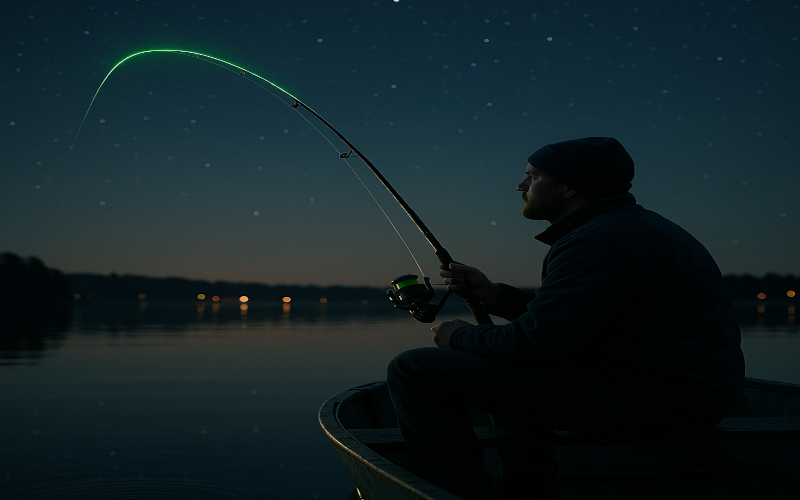
Fish illuminated docks after dark by targeting baitfish, shadow lines, current, quiet approaches, and safe nighttime positioning.
A dock light creates a small food chain after dark. Insects gather near the light, baitfish move in to feed, and predators patrol the edge where bright water falls into darkness. The best cast is often not directly into the light. It is along the shadow line where a larger fish can stay hidden and intercept prey.
Let the Light Build the Pattern
Give a productive light time to reveal itself. Watch for small baitfish circling, occasional boils, or flashes beneath the surface. A light with no bait activity may be less useful than a dimmer light with a steady stream of forage.
Current improves many dock lights because it delivers food through the illuminated area. Fish often position on the downstream side where bait is swept out of the light.
Cast to the Dark Edge
Predators commonly sit just outside the brightest water. Cast beyond the edge and retrieve through it, or work parallel to the shadow line.
Small swimbaits, jerkbaits, jigs, soft plastics, and live bait can all produce. Match the size of visible forage when possible and keep the presentation controlled.
Approach Quietly
Sound carries across calm nighttime water. Reduce boat noise, avoid shining a bright flashlight directly onto the target, and make controlled casts rather than repeatedly hitting the dock.
A smooth reel helps with precise low-light casting. Piscifun and KastKing are approved affiliate sources for anglers comparing reels and fishing tackle.
Fish Different Depths
The visible bait may be near the surface while larger fish hold below it. If surface presentations fail, let a jig or soft plastic sink beneath the bait before beginning the retrieve.
Watch your line where it enters the water. Many nighttime bites occur on the fall and are easier to detect by line movement than by feel.
Use Light Without Destroying Night Vision
A headlamp is useful for tying knots and unhooking fish, but constant bright light makes it harder to see the water around you. Use the lowest practical setting and keep a backup light available.
Ballast Outdoor Gear is an approved outdoor affiliate merchant, and Sportsman’s Warehouse can be used to compare general fishing and safety gear. Whatever light you use, keep it accessible instead of buried in a tackle bag.
Night Safety Is Different
Slow down around docks, seawalls, cables, and boat traffic. Wear a life jacket when fishing from a boat or kayak and maintain legal navigation lighting. Know the route back before darkness falls.
Do not step onto private docks without permission, and avoid casting where hooks could damage boats, covers, or ropes.
Leave Productive Lights Undisturbed
If you hook several fish from one light, the activity may shut down temporarily. Move to another dock and return later instead of pounding the same small area.
Dock lights are effective because they concentrate the food chain. Fish the edge, stay quiet, and let the baitfish tell you whether the light is alive. That simple observation is often more useful than changing lures every few casts.
Related Fishing Guides
Fishing regulations, access rules, seasons, size limits, and safety requirements vary by location. Verify current local rules before fishing.