
Bank Fishing Strategy: How to Cover Water Without a Boat
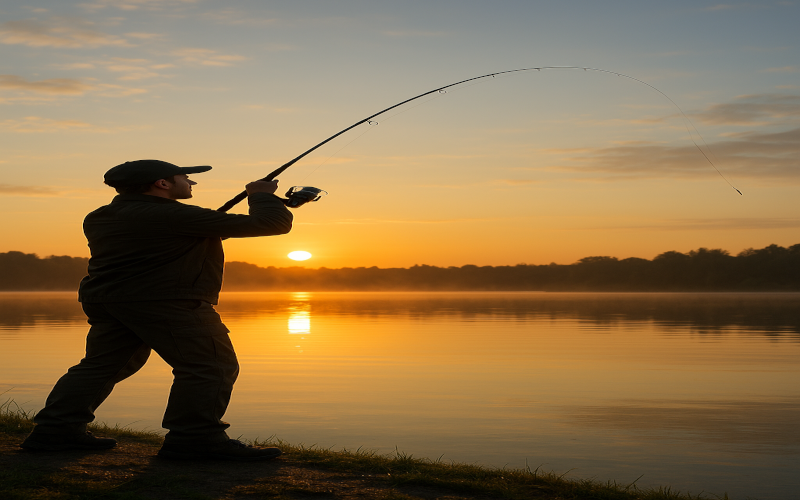
Fish more effectively from shore by choosing high-percentage access, casting angles, mobile tackle, depth changes, and seasonal shoreline patterns.
Bank fishing can be every bit as strategic as boat fishing. The limitation is not that you cannot reach fish. The limitation is that you must choose your water and casting angles more carefully because you cannot simply drive to the next piece of structure.
Choose Access With Multiple Options
A good bank spot gives you more than one target. Look for a point, bridge, creek mouth, drain, riprap bank, vegetation edge, dock, or change in depth that can be reached from the same general area.
Avoid spending an hour on a featureless bank just because parking is convenient. Walk ten minutes to reach a transition and your odds can improve dramatically.
Cast Parallel Before Casting Far
Many shore anglers throw as far as possible toward open water. That can work, but fish often travel along the bank. Your first casts should frequently be parallel or at a shallow angle, especially when vegetation, shade, rock, or a drop follows the shoreline.
By fishing close first, you also avoid dragging a hooked fish through the same shallow water you plan to fish next.
Use a Mobile Tackle System
The more you carry, the less you move. One or two rods and a compact selection of lures usually cover more water than a heavy load of gear. Bring presentations that fish different depths rather than ten versions of the same lure.
For portable fishing gear, anglers can compare FishVault products, browse Piscifun tackle, or review KastKing fishing equipment. Choose the smallest system that still lets you adjust to depth, cover, and water clarity.
Look for Depth You Can Reach
From shore, deep water close to the bank is valuable. Steep points, outside bends, dam faces, bridge abutments, marina walls, and channel swings can place deeper water within casting distance.
You do not need to know the exact contour. Let a jig or sinker fall and compare bottom-contact time at different angles. A noticeably longer fall often reveals the edge you are trying to find.
Wind Can Put the Best Water at Your Feet
Wind blowing into a bank can push bait and stained water toward shore. It may make casting harder, but it can also bring feeding fish within easy reach.
Instead of automatically choosing the calm bank, test the windy side when conditions are safe. Use slightly heavier lures if necessary to maintain control and keep slack out of the line.
Footwear and Access Matter
Bank fishing often means mud, wet grass, uneven rock, and steep paths. Wear footwear appropriate for the terrain and stay away from unstable edges. XtraTuf and Muck Boots are approved affiliate merchants to compare for wet outdoor footwear.
Do not climb fences, cross private property, or create new paths through sensitive banks. Legal access is part of the fishing plan.
Rotate Spots Instead of Waiting Too Long
Bank fishing improves when you think in terms of a route. Give a high-percentage area enough casts to test different depths and presentations, then move. If fish are active, you may get an immediate response. If they are not, staying another hour rarely changes the structure.
Keep notes on which banks produce under specific wind directions, water levels, and seasons. Over time, a handful of shore access points can become a reliable circuit.
A boat gives an angler mobility on the water. A bank angler creates mobility by walking, choosing access intelligently, and fishing the shoreline before reaching for maximum casting distance. That approach turns limited access into a focused strategy.
Related Fishing Guides
Fishing regulations, access rules, seasons, size limits, and safety requirements vary by location. Verify current local rules before fishing.